Why it works:
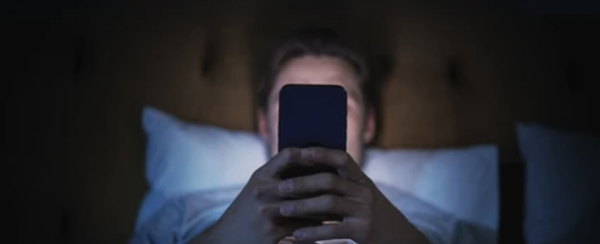
Scrolling, texting, and binge-watching don’t just eat up time, they keep your brain in reward-seeking mode. That dopamine
loop keeps you wired when you’re supposed to be winding down.
Studies show it’s not just the screen light, (even though thats what gets the press) it’s the content that ramps up alertness and delays sleep. That “just one more episode” or scroll spiral keeps your brain in go-mode way past bedtime.
A screen curfew gives your brain time to shift out of task mode and into rest mode. And that is what lets those slower, sleepier brain waves take over. And this will lead us into tomorrow's tip....
Try it tonight and see how it feels.
More tomorrow,
Sarah
Scientific References:
Exelmans & Van den Bulck (2017). J. Clin. Sleep Med. — Binge-watching linked to insomnia via cognitive arousal.
Hinojosa et
al. (2024). Psychol. Health Med. — Social media engagement before bed associated with poor sleep and pre-sleep arousal.
Przybylski et al. (2021). J. Adolesc. — Emotional content and screen habits disrupt sleep patterns.
Carter et al. (2016). Front. Psychol. — Bedtime procrastination and late-night screen use reduce sleep quality and
duration.
Perlis et al. (2001). J. Sleep Res. — High beta-wave activity before sleep linked to insomnia and delayed sleep onset.